
Overview of Fillable PDF Forms
A fillable PDF example showcases interactive fields: text boxes, checkboxes, radio buttons, and dropdowns, enabling users to input data directly. This format streamlines data collection, reduces errors, and improves workflow efficiency across contracts, surveys, and applications. Widely used. now
What Is a Fillable PDF?
In a fillable PDF example, the document is designed with interactive form fields that users can complete directly within the PDF viewer. These fields include text boxes for typed responses, checkboxes for binary choices, radio buttons for mutually exclusive options, and dropdown menus for selecting from a list. The PDF format preserves layout, fonts, and graphics across platforms, ensuring that the form looks identical whether opened on Windows, macOS, Linux, or mobile devices. When a user fills out a form, the data is stored within the PDF’s internal structure, allowing for easy extraction later into spreadsheets or databases. Fillable PDFs are widely used in business contracts, government applications, and educational surveys because they combine the familiarity of paper forms with the efficiency of digital data capture. They can be created with tools such as Adobe Acrobat, Foxit PhantomPDF, or free alternatives like LibreOffice Draw, and can be secured with passwords or digital signatures to maintain integrity. The ability to embed scripts for validation or calculation further enhances their functionality, making them a versatile solution for any scenario that requires reliable, repeatable data entry without the need for printing or scanning. Moreover, fillable PDFs support advanced features such as auto‑filling from external databases, conditional logic that shows or hides fields, and cloud integration for real‑time data sync. These capabilities make them for workflows demanding speed, accuracy, and compliance with data protection the regulations!
Common Use Cases and Industries
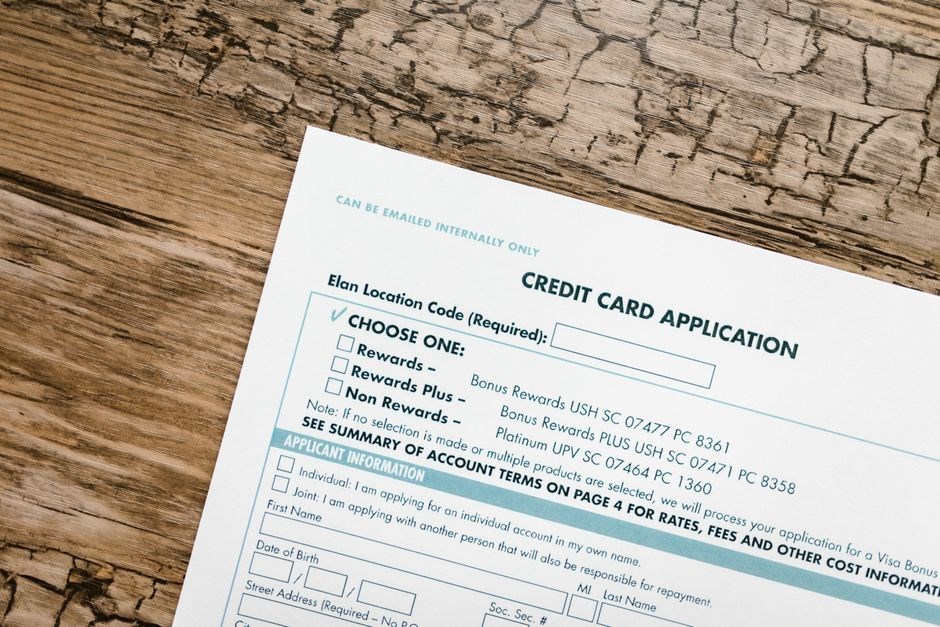
Fillable PDF examples are especially popular in sectors that rely on standardized documentation and need quick error‑free data capture. In finance, banks and credit unions use them for loan applications, credit‑card requests, and account opening forms, allowing customers to submit information online and reducing manual data entry. Healthcare providers employ them for patient intake, consent forms, and insurance claim submissions, ensuring compliance with HIPAA and enabling secure transmission of sensitive data. Government agencies use them for tax filings, permit applications, and public service requests, streamlining citizen interactions and reducing paper waste. Educational institutions adopt them for enrollment forms, scholarship applications, and survey instruments, providing students and staff with a consistent, accessible format. Human‑resources departments rely on them for job applications, performance reviews, and benefits enrollment, integrating the collected data directly into HRIS systems. Real‑estate firms use fillable PDFs for lease agreements, property disclosures, and inspection reports, while legal practices employ them for contracts, affidavits, and discovery requests, benefiting from the ability to add digital signatures and enforce field validation. Non‑profits and NGOs use them for donation forms, volunteer sign‑ups, and grant applications, ensuring that data is captured accurately and can be exported to donor management platforms. Finally, small businesses and freelancers use fillable PDFs for invoices, purchase orders, and client questionnaires, taking advantage of the low cost and ease of distribution via email or cloud storage. Across all these industries, the common thread is the need for a reliable, cross‑platform solution that preserves document integrity while enabling efficient data collection and processing.

Advantages Over Traditional Paper Forms
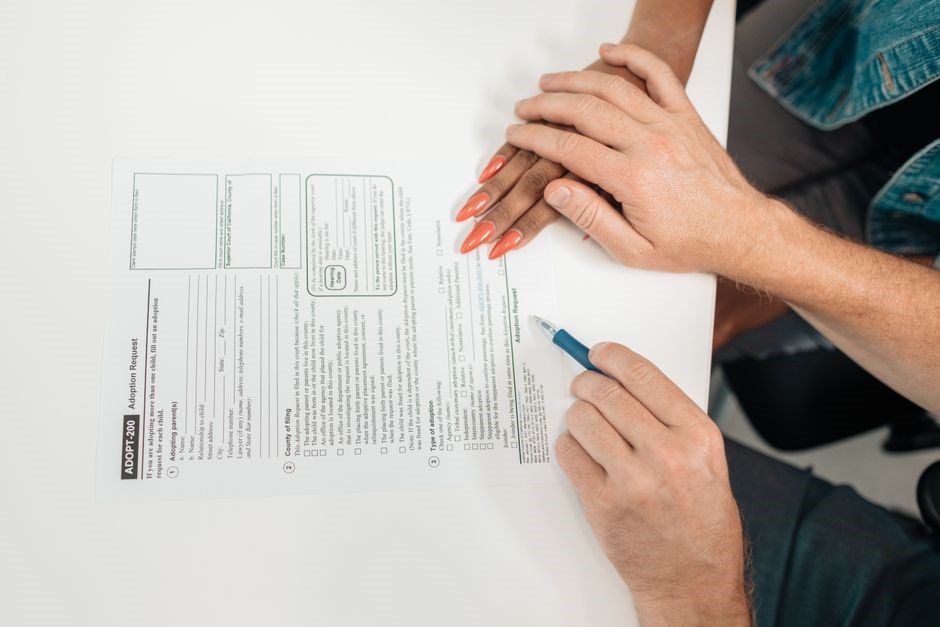
Fillable PDF examples offer benefits that outpace paper. They eliminate manual transcription, cutting errors and saving time. Users type directly into fields, and built‑in validation flags incomplete or incorrectly formatted entries before submission. They support instant electronic signatures, enabling secure, legally binding agreements without printing or scanning. The same form can be reused, versioned, and distributed via email or cloud, ensuring consistency. Data is automatically structured; exporting to CSV or Excel is a single click, streamlining analytics. Storage is digital, reducing clutter and environmental impact. Integration with backend systems—CRMs, ERPs, or custom APIs—triggers workflows, notifications, and approvals in real time. These advantages drive efficiency, accuracy, and compliance in any organization handling repetitive documentation.
Fillable PDFs are platform‑agnostic; they render identically on Windows, macOS, Linux, iOS, and Android, eliminating the need for format conversions. Accessibility improves with screen‑reader support and keyboard navigation, meeting ADA requirements. Security features—password protection, encryption, digital certificates—safeguard sensitive data. Audit trails record who accessed or modified a form, aiding compliance. Multimedia embedding—images, PDFs, links—enhances guidance and reduces ambiguity. Maintaining a digital form library is negligible compared to printing, mailing, and storage, yielding long‑term savings for businesses of all sizes.

In short, fillable PDF examples transform routine paperwork into a streamlined, error‑free, environmentally friendly process that aligns with modern digital workflows. They support conditional logic for forms.
Key Features of a Good Fillable PDF Example
A robust fillable PDF example incorporates several essential features that enhance usability, accessibility, and data integrity. First, field types are diverse—text boxes, numeric inputs, checkboxes, radio buttons, and drop‑downs—each with clear labels and placeholder hints. Second, validation rules enforce correct formats (e.g., email, phone, date) and required‑field checks, preventing incomplete submissions. Third, conditional logic shows or hides sections based on prior answers, streamlining the user journey. Fourth, the layout is responsive; fields align neatly across devices, and the form scales on mobile screens without distortion; Fifth, accessibility is built in: tab order is logical, ARIA labels describe elements, and the form is compatible with screen readers, meeting ADA compliance. Sixth, security measures protect sensitive data: password protection, encryption, and digital signatures ensure confidentiality and authenticity. Seventh, integration hooks allow the form to push data directly to CRM or ERP systems via APIs, reducing manual entry. Finally, a revision history tracks changes, and export options (CSV, XML, JSON) enable downstream analysis. Additionally, the form supports multilingual content, allowing users to switch languages without re‑designing the layout. Custom branding—logos, color schemes, and custom fonts—maintains corporate identity. The form’s metadata is searchable, improving document management. All these features combine to create a professional, efficient, and user‑friendly digital form that replaces paper entirely.By embedding real‑time validation, auto‑save, and offline capability, the form remains functional even without internet access, ensuring data capture in remote environments. Moreover, the form’s analytics dashboard tracks completion rates, time spent, and drop‑off points, allowing continuous improvement of the user experienceThanks.
Creating and Designing Fillable PDFs
Use intuitive layout, choose proper tools, add fields, test, and export. A good example balances design and functionality, ensuring fields are clear, validation is present, and the form is mobile‑friendly. Keep branding consistent and data secure!!
Choosing the Right Software Tools
When crafting a fillable PDF example, the first decision is the creation platform. Industry‑standard choices include Adobe Acrobat Pro DC, which offers a robust field‑management suite, native PDF‑to‑CSV export, and advanced security controls such as password protection and digital signatures. For budget‑conscious teams, Nitro PDF Pro delivers comparable form‑field capabilities, a streamlined user interface, and seamless integration with Microsoft Office. Foxit PhantomPDF is another strong contender, providing lightweight performance, extensive field‑validation options, and cross‑platform support. Web‑based alternatives like PDFescape and JotForm PDF Editor allow instant field placement without installing software, and they automatically generate JSON or CSV payloads for downstream processing. If the organization requires programmatic control, libraries such as iText7 (Java/C#) or PDFBox (Java) enable developers to embed form fields, set default values, and enforce validation rules at runtime. Key selection criteria include: (1) field‑type variety (text, checkbox, radio, dropdown, signature), (2) export formats (CSV, XML, JSON), (3) security features (encryption, digital signatures, redaction), (4) integration hooks (API, Zapier, CRM connectors), and (5) cost versus feature trade‑offs. A well‑chosen tool not only speeds up design but also guarantees that the final fillable PDF example remains functional, secure, and ready for automated data capture across diverse business processes.
Adding Text, Checkboxes, and Dropdowns
In a fillable PDF example, the placement of text fields, checkboxes, and dropdown menus is guided by usability principles and the document’s logical flow. Begin by mapping the data capture sequence: personal details, preferences, and consent sections. Use the form‑tool’s “Text Field” widget for free‑form entries, setting the border style to a subtle gray line and the font to a legible sans‑serif at 10‑pt size. For binary choices, insert “Checkbox” widgets; align them horizontally with a consistent 0.2‑inch gap and label each with a concise verb such as “Agree” or “Decline.” Dropdowns are ideal for limited option sets; configure the “Combo Box” widget to display a placeholder like “Select State” and populate the list with a comma‑separated string of options. Ensure that each field has a unique name attribute to avoid data collisions during export. Apply tab order logic so that pressing the Tab key moves the cursor from the first name field to the last name, then to the checkbox, and finally to the dropdown. Add validation rules: require the first name field, enforce a minimum of two characters, and set the dropdown to “Required” so that the form cannot be submitted without a selection. Finally, test the form on multiple PDF readers—Adobe Reader, Foxit, and web‑based viewers to confirm that all widgets render correctly and that the exported CSV contains the expected column headers. This structured approach ensures that the final PDF is both user‑friendly and ready for automated data extraction and integration for efficiency.

Form Layout and User Experience Tips
Designing a fillable PDF example begins with a clear visual hierarchy. Use a two‑column layout: left column for labels, right column for fields. Keep margins at 0.75 inches to avoid crowding. Label fonts should be bold 10‑pt, field borders thin gray, and field background white for contrast. Group related fields into shaded boxes or subtle borders to signal sections—personal info, preferences, and consent. Align checkboxes and radio buttons with their labels on the same baseline to aid quick scanning. For dropdowns, provide a default “Select…” prompt and ensure the list is sorted alphabetically to reduce lookup time. Maintain consistent tab order that follows the visual flow; the first name field should precede the last name, then the address, followed by the checkbox and dropdown. Use “Required” indicators (asterisks) next to mandatory fields and offer inline help text in a smaller font to explain ambiguous entries. Test the form on both desktop and mobile PDF viewers; responsive scaling should keep fields legible without horizontal scrolling. Finally, add a “Submit” button styled with a contrasting color and a clear label like “Send” or “Save,” and include a brief confirmation message upon successful submission. These layout and UX practices ensure that the fillable PDF example is intuitive, accessible, and efficient for end users.
Accessibility matters; set tab stops and provide tooltip text for each field. Use ARIA labels and meet WCAG 2.1 AA contrast. Validate entries with inline error messages, offer a Reset button, and include a Print option for paper output. Test on Windows, macOS, and Linux.
Testing and Validation of Form Fields
Before deployment, rigorously test each element of a fillable PDF example. Verify that all text boxes, checkboxes, radio buttons, and dropdowns display correctly in Adobe Reader, Foxit, and web‑based viewers. Check tab order by pressing Tab to ensure logical progression. Apply validation rules such as required fields, numeric ranges, and email formats. Use the authoring tool’s validation engine to flag missing or incorrectly formatted data. Test edge cases—maximum characters, special symbols, and empty submissions—to confirm graceful handling. Conduct cross‑platform checks on Windows, macOS, iOS, and Android for consistent behavior. Perform accessibility testing: screen readers should announce field labels and ARIA attributes must be present. Simulate form submission to the backend or export function, verifying that captured data matches input and that no data loss occurs. Document all test cases, record screenshots, and iterate until the form meets quality standards.
Additionally, schedule regression tests after any form update. Use automated scripts to populate fields and verify export integrity. Monitor performance metrics such as load time and memory usage on large documents. Collect user feedback through a short post‑submission survey embedded in the PDF. Analyze error logs to identify common input mistakes and refine validation rules accordingly; Maintain a version history to track changes and ensure backward compatibility with older PDF readers. Validate!.
All test logs are archived for compliance audit trails!

Managing and Utilizing Data from Fillable PDFs
Managing data from a fillable PDF example involves exporting field values to CSV or Excel, then importing into CRM or ERP via APIs. Secure transmission (HTTPS, encryption) protects sensitive info. Automation scripts trigger workflows, sending notifications or updating records instantly.Securenow

Exporting Data to CSV/Excel
When a user completes a fillable PDF example, the form fields can be extracted and saved as a CSV or Excel file for downstream processing. Most PDF editors, such as Adobe Acrobat, provide an “Export Data” function that writes each field name and its value into a tab‑delimited file. The exported file can then be opened in spreadsheet software, allowing quick filtering, sorting, or pivot analysis. For larger volumes, scripting tools like Python’s PyPDF2 or pdfrw libraries can programmatically read each field, build a dictionary, and write it to CSV using the csv module. This approach is especially useful when integrating with automated data pipelines or CRMs. When exporting, it is important to preserve field order and data types; for example, dates should be formatted as ISO 8601 strings (YYYY‑MM‑DD) to avoid locale‑dependent misinterpretation. Additionally, the export process should handle special characters (commas, newlines) by enclosing values in quotes or using proper escaping. Security considerations include encrypting the CSV file or using secure transfer protocols (SFTP) when sending the data to a server. By exporting to CSV or Excel, organizations can leverage familiar tools for data validation, reporting, and analytics, turning a simple PDF form into a powerful data source for business intelligence. In practice, many organizations use batch export scripts that run nightly, pulling completed PDF forms from a shared folder, converting the data to CSV, and feeding it into a data warehouse. The script can also generate a log file that records the number of records processed, any missing fields, and any conversion errors, helping maintain data integrity and support compliance with regulations such as GDPR or HIPAA. When exporting to Excel, developers can take advantage of the newer .xlsx format, which supports richer data types, formulas, and data validation rules, allowing embedded formulas to automatically calculate totals or flag outliers and reduce manual QA effort.
Fillable PDF examples showcase interactive fields: text boxes, checkboxes, radio buttons, and dropdowns, enabling users to input data directly. This format streamlines data collection, reduces errors, and improves workflow efficiency across contracts, surveys, and applications. Widely used.
Exporting Data to CSV/Excel: When a user completes a fillable PDF example, the form fields can be extracted and saved as a CSV or Excel file for downstream processing. Most PDF editors, such as Adobe Acrobat, provide an “Export Data” function that writes each field name and its value into a tab‑delimited file. The exported file can then be opened in spreadsheet software, allowing quick filtering, sorting, or pivot analysis. For larger volumes, scripting tools like Python’s PyPDF2 or pdfrw libraries can programmatically read each field, build a dictionary, and write it to CSV using the csv module. This approach is especially useful when integrating with automated data pipelines or CRMs. When exporting, it is important to preserve field order and data types; for example, dates should be formatted as ISO 8601 strings (YYYY‑MM‑DD) to avoid locale‑dependent misinterpretation. Additionally, the export process should handle special characters (commas, newlines) by enclosing values in quotes or using proper escaping. Security considerations include encrypting the CSV file or using secure transfer protocols (SFTP) when sending the data to a server. By exporting to CSV or Excel, organizations can leverage familiar tools for data validation, reporting, and analytics, turning a simple PDF form into a powerful data source for business intelligence. In practice, many organizations use batch export scripts that run nightly, pulling completed PDF forms from a shared folder, converting the data to CSV, and feeding it into a data warehouse. The script can also generate a log file that records the number of records processed, any missing fields, and any conversion errors, helping maintain data integrity and support compliance with regulations such as GDPR or HIPAA. When exporting to Excel, developers can take advantage of the newer .xlsx format, which supports richer data types, formulas, and data validation rules, allowing embedded formulas to automatically calculate totals or flag outliers and reduce manual QA effort.
Integrating with Backend Systems (API, CRM): The service then triggers an outbound webhook to the CRM, ensuring the record is created atomically. By using idempotent keys, duplicate submissions are safely ignored. Monitoring dashboards built with Grafana or Kibana provide real‑time visibility into processing latency and error rates, enabling rapid incident response. This architecture not only guarantees data consistency but also scales horizontally as form traffic grows, making the PDF workflow a resilient backbone for modern digital services. and ensures compliance.!

Ensuring Data Security and Compliance

In a fillable PDF example, safeguarding user data is paramount. First, enable password protection on the PDF itself, restricting editing and printing while still allowing form filling. Use AES‑256 encryption, the industry standard, to prevent unauthorized access. Next, enforce field‑level validation: numeric fields reject letters, date fields enforce ISO 8601, and email fields match RFC 5322 patterns. This reduces injection risks and ensures data integrity before it leaves the client’s browser. securely! OK keep.!!
After the form is submitted, the PDF should be stored in a secure, access‑controlled repository such as an encrypted S3 bucket or a dedicated document management system. A retention policy that automatically purges data after the legal hold period protects against accidental retention. Audit trails record every upload, download, and edit, providing an immutable history that satisfies regulatory requirements. Integrating form data with a CRM via API auto‑updates customer records, cutting manual entry errors!!!
Beyond storage and integration, data security must extend to the user interface. All form fields should be designed with clear labels, consistent spacing, and responsive layout to prevent accidental mis‑entry. Implementing a final confirmation screen that summarizes the entered data and provides a download link for the signed PDF gives users confidence and a verifiable audit trail. Monitoring automated alerts ensure any anomalous activity is detected early, safeguarding the integrity of the data pipeline.
Automation and Workflow Integration
In a fillable PDF example, automation is achieved by embedding JavaScript that triggers on form submission, sending data via HTTP POST to a REST endpoint. The endpoint parses the PDF, extracts field values, and pushes them to a database or CRM. Using Adobe Acrobat’s “Submit Form” action, you can specify a target URL and choose PDF, XML, or FDF formats. Integration with Zapier or Integromat allows non‑technical users to map fields to Google Sheets, Salesforce, or custom APIs, creating a seamless data flow. Workflow engines like Camunda or Microsoft Power Automate can pick up the submitted PDF, apply business rules, and route it to the appropriate approval queue. When the document is approved, a signed PDF is generated via Adobe Sign or DocuSign, and the final version is archived in an encrypted cloud bucket. This end‑to‑end process eliminates manual data entry, reduces processing time, and ensures auditability. By leveraging webhooks, the system can notify stakeholders in real time, updating dashboards and triggering email alerts. The automation framework also logs each step, providing traceability for compliance audits and enabling continuous improvement of the workflow. Additionally, the automation can incorporate conditional logic: if a field value exceeds a threshold, the PDF is routed to a risk review team; otherwise, it proceeds to the standard approval path. The system can also enforce digital signatures by embedding a signature field that requires a certified digital ID. The locked PDF is stored in a version‑controlled repository, ensuring compliance full.